




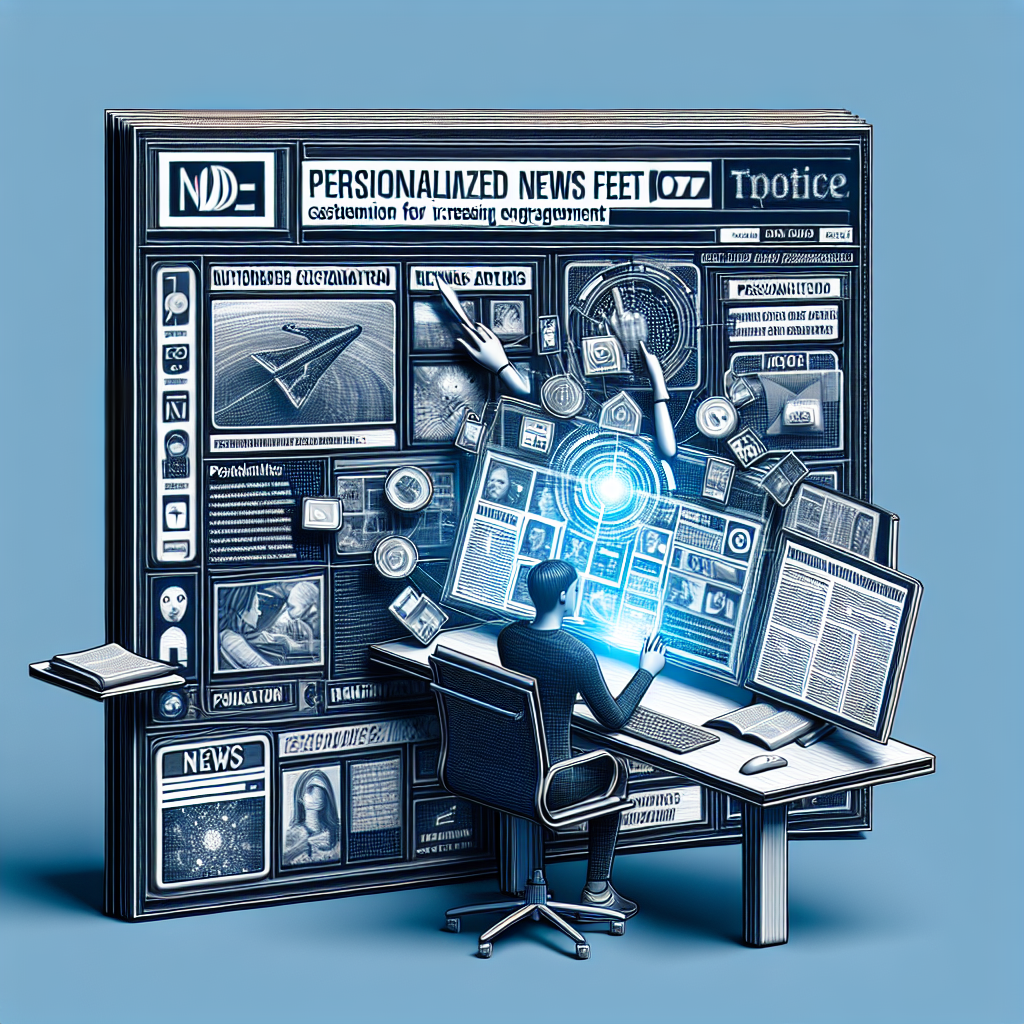
In our fast-paced digital world, customizing news feeds for targeted content delivery has become crucial. As we scroll through endless information online, we're no longer satisfied with generic content; we crave personalized experiences that cater to our unique interests and needs. It's like having a personal news curator at our fingertips, sifting through the noise to bring us what matters most.
This evolution is powered by cutting-edge technologies such as AI, machine learning, and big data analytics. These tools work tirelessly behind the scenes, analyzing our behaviors, preferences, and demographics to create a tailored content experience. For publishers and platforms, this means improved user engagement, higher retention rates, and increased ad revenue.
However, customizing news feeds isn't without its challenges. Balancing content relevance with privacy concerns and maintaining content diversity is a complex task. As we delve deeper into the era of personalized content, it's essential to understand the mechanics, technologies, and implications of these systems for both users and content creators.
In today's digital landscape, personalized news feeds have become essential in tackling information overload. With an overwhelming amount of content published daily, finding relevant and meaningful information can be a daunting task for users. This is where personalization steps in, acting as a sophisticated filter that sorts and prioritizes content based on individual preferences, interests, and online behaviors.
At the heart of this personalization are advanced machine learning algorithms. These systems analyze various data points, including reading history, interaction patterns, time spent on articles, and social sharing activities. By leveraging this data, news platforms can deliver timely, tailored content that resonates with each user's unique consumption patterns. The result? Improved content visibility for publishers and higher satisfaction rates for users, leading to increased engagement and repeat visits.
Moreover, customized feeds can introduce users to new topics, gently expanding their horizons while maintaining relevance. For publishers, this personalized approach fosters a loyal audience, reduces user churn, and opens up new monetization opportunities through targeted advertising and subscription models.
Jump to:
Key Technologies Driving News Feed Customization
User Data Collection and Privacy Considerations
Implementing AI and Machine Learning for Content Personalization
Strategies for Segmenting Audiences and Content Types
Measuring the Effectiveness of Customized News Delivery
Common Challenges in Customizing News Feeds
Best Practices and Future Trends in Targeted Content Delivery
The foundation of modern news feed customization lies in a sophisticated blend of technologies working in harmony to deliver personalized user experiences. At the core of this system are artificial intelligence (AI) and machine learning algorithms. These powerful tools process and analyze extensive datasets, including user browsing habits, click patterns, and engagement metrics. By examining both historical and real-time data, these systems can effectively identify user preferences and predict which content types are most likely to capture attention.
Natural language processing (NLP) plays a crucial role in understanding the context, relevance, and sentiment of articles. This enables platforms to recommend content that closely aligns with user interests. Additionally, collaborative and content-based filtering methods are essential. The former uses behaviors of similar users to make recommendations, while the latter matches new content with a user's established interests.
To ensure personalized suggestions remain current and responsive, data pipelines and real-time analytics infrastructure are employed. APIs facilitate seamless data sharing between publishers, ad networks, and third-party platforms, creating a robust ecosystem for targeted content delivery. This technological synergy results in news feeds that not only reflect individual preferences but also adapt swiftly to evolving user interests and behaviors.
User Data Collection and Privacy ConsiderationsUser data collection is the cornerstone of news feed personalization, but it comes with significant privacy considerations. Platforms gather an extensive array of user information, including browsing history, time spent on articles, click patterns, device types, and location data. They also analyze implicit signals like scrolling behavior and content category revisits. This comprehensive data collection enables algorithms to construct detailed user profiles, powering tailored content recommendations and experiences.
However, the collection of sensitive information brings substantial privacy challenges and regulatory obligations. Platforms must adhere to data privacy laws such as GDPR in Europe and CCPA in the United States. These regulations empower users with rights over their data, including transparency about collection practices, options to limit tracking, and the ability to request data deletion.
To protect user privacy, platforms must implement robust security measures like encryption, access controls, and data minimization. Transparency in data policies and easily accessible privacy controls are also crucial. Balancing data-driven personalization with user privacy is essential for maintaining trust and regulatory compliance, as failing to do so can result in user backlash and legal repercussions.
Implementing AI and Machine Learning for Content PersonalizationAI and machine learning are revolutionizing content personalization in news feeds. This sophisticated process begins with the collection and analysis of extensive datasets, encompassing user interactions, browsing history, demographics, and engagement metrics from various sources. Supervised learning models are trained on labeled data to recognize user preferences and predict future behaviors. Simultaneously, unsupervised learning techniques, like clustering, uncover hidden patterns and segment users based on interests without predetermined labels.
These AI models form the backbone of recommender systems. Collaborative filtering suggests content based on similar users' behaviors, while content-based filtering matches article characteristics to known user preferences. Hybrid approaches combine these methods for improved accuracy. Natural language processing (NLP) enhances the system's ability to understand and categorize article content, sentiment, and emerging trends in real-time.
Operating in a continuous feedback loop, these AI-driven systems analyze user responses to recommendations, allowing for constant refinement. Real-time processing with scalable cloud infrastructure ensures swift updates to user profiles. To maintain responsible AI usage, platforms incorporate privacy-preserving techniques such as data anonymization and federated learning. The result is a personalized, dynamic, and responsive news feed experience that adapts to each user's evolving interests.
Strategies for Segmenting Audiences and Content TypesEffective segmentation is a cornerstone of optimizing targeted content delivery in custom news feeds. This process begins with comprehensive data collection, encompassing user demographics, behavior patterns, interests, location, and device usage. Advanced clustering algorithms, such as K-means or hierarchical clustering, group users with similar interests and engagement histories. These user segments are then utilized to deliver tailored news content, adjusting headlines, article formats, and even notification frequency to suit each group's preferences. Additionally, machine learning classification can assign users to predefined personas, like technology enthusiasts or sports fans.
Content segmentation is equally crucial, involving the categorization of news into topics, formats, sentiment, or chronology. Natural language processing (NLP) techniques, including topic modeling and sentiment analysis, enable large-scale article categorization. The combination of user and content segmentation allows for dynamic matching, ensuring each user segment receives the most engaging content. Recommender system algorithms leverage these segments to personalize feeds in real-time, adapting to changing preferences and breaking news. It's important to strike a balance and avoid over-segmentation, which can limit content diversity. Regular updates to segments with fresh behavioral data ensure that systems remain adaptive to evolving user interests, maintaining relevant and engaging content delivery.
Measuring the Effectiveness of Customized News DeliveryEvaluating the effectiveness of customized news delivery involves a comprehensive approach using both quantitative and qualitative metrics. Key performance indicators (KPIs) play a crucial role in this assessment, with user engagement rates such as click-through rates (CTR), time spent on page, and scroll depth being primary focuses. These metrics provide valuable insights into how well personalized content captures user attention and encourages deeper exploration. Another vital measure is the retention rate, which indicates how often users return to the platform after consuming personalized content. High retention rates strongly suggest that the customized experience aligns well with user expectations and preferences.
Conversion metrics, including subscription sign-ups, newsletter registrations, and ad interaction rates, demonstrate the impact of content personalization on business outcomes. A/B testing is frequently employed to compare segments with and without personalized feeds, allowing for a direct assessment of engagement and conversion behaviors. Qualitative feedback, gathered through user surveys and support requests, helps identify areas where personalization may fall short. By combining behavioral analytics with user feedback, platforms can gain a comprehensive understanding of effectiveness. Regular review of these data points enables continuous refinement of algorithms, leading to improved user satisfaction and achievement of audience and revenue goals.
Common Challenges in Customizing News FeedsCustomizing news feeds presents a variety of challenges that impact both platforms and users. One of the most pressing issues is the creation of filter bubbles, where algorithms continuously narrow the range of content presented to users. This reinforces existing preferences and potentially limits exposure to diverse viewpoints, potentially leading to echo chambers. Striking a balance between personalization and content diversity is a delicate task that requires careful consideration.
Data privacy and security are paramount concerns, given the sensitive nature of information collected for personalized feeds. Compliance with strict data regulations like GDPR and CCPA necessitates robust privacy measures and transparent user controls, which can be complex and resource-intensive to implement effectively.
Scalability poses another significant challenge. Real-time processing of vast amounts of data to deliver timely, relevant content puts considerable strain on infrastructure. Latency issues can negatively impact user experience, making it crucial to optimize algorithms and backend systems for performance. Additionally, rapidly shifting user expectations require agile adaptation of recommendation models. Ongoing monitoring for algorithmic bias and ensuring fair, accurate recommendations are also critical technical concerns. Addressing these challenges is essential for maintaining user trust and delivering value through customized news feeds.
Best Practices and Future Trends in Targeted Content DeliveryImplementing best practices in targeted content delivery requires a delicate balance of technology, user needs, and regulatory compliance. While comprehensive data collection is crucial for effective personalization, platforms should adhere to data minimization principles, collecting only essential information for recommendations. Transparent consent management, including clear user permissions and easy opt-out options, is vital for building trust and complying with regulations like GDPR and CCPA.
Regular audits of algorithms for bias and accuracy are essential. Diversifying recommendation models helps mitigate filter bubbles and ensures users are exposed to a wide range of perspectives. Real-time analytics and scalable infrastructure support timely content delivery as audiences grow. Emphasizing content diversity and serendipitous discovery, alongside relevance, helps combat echo chambers and broadens user horizons.
Looking ahead, we can expect increased adoption of federated learning and privacy-preserving techniques, allowing model training without centralizing personal data. Advancements in natural language understanding and multimedia analysis will enhance content-user matching across various formats. The integration of explainable AI is anticipated to provide users with greater insight into content recommendations. As targeted content delivery evolves, continuous iteration based on feedback, algorithm performance, and regulatory changes will be crucial for success.
The way we consume news and information online has undergone a remarkable transformation, thanks to customized news feeds and targeted content delivery. It's like having a personal librarian who knows exactly what you want to read, watch, or listen to. By leveraging cutting-edge technologies such as AI, machine learning, and natural language processing, platforms can now offer content experiences that are not just relevant but also timely and tailored to our individual interests.
This approach is a win-win for both users and publishers. We, as users, get to enjoy more meaningful and engaging interactions with content. Publishers, on the other hand, see improved engagement rates and better audience retention. But here's the catch: with great personalization comes great responsibility. Platforms must pay close attention to data privacy, maintain transparency, and ensure content diversity to keep our trust and comply with regulatory standards.
As innovation continues in this space, the key to success will be finding the sweet spot between personalization, privacy protection, and content variety. This balancing act is crucial for building strong, enduring relationships with audiences in our digital age.